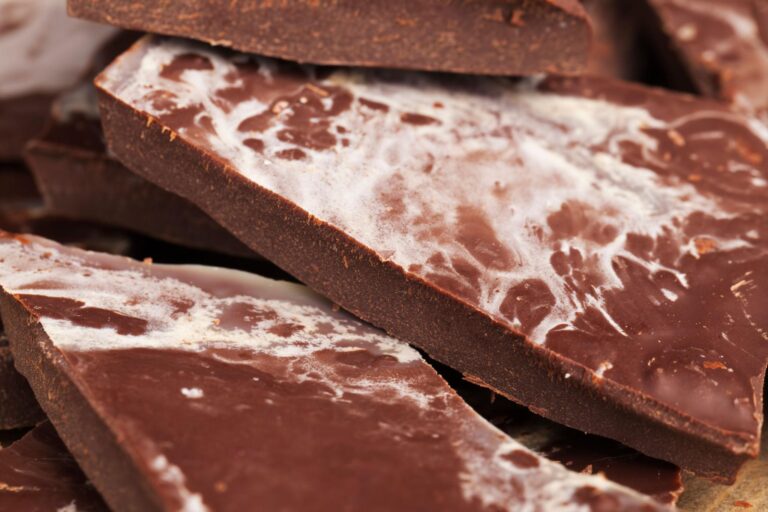
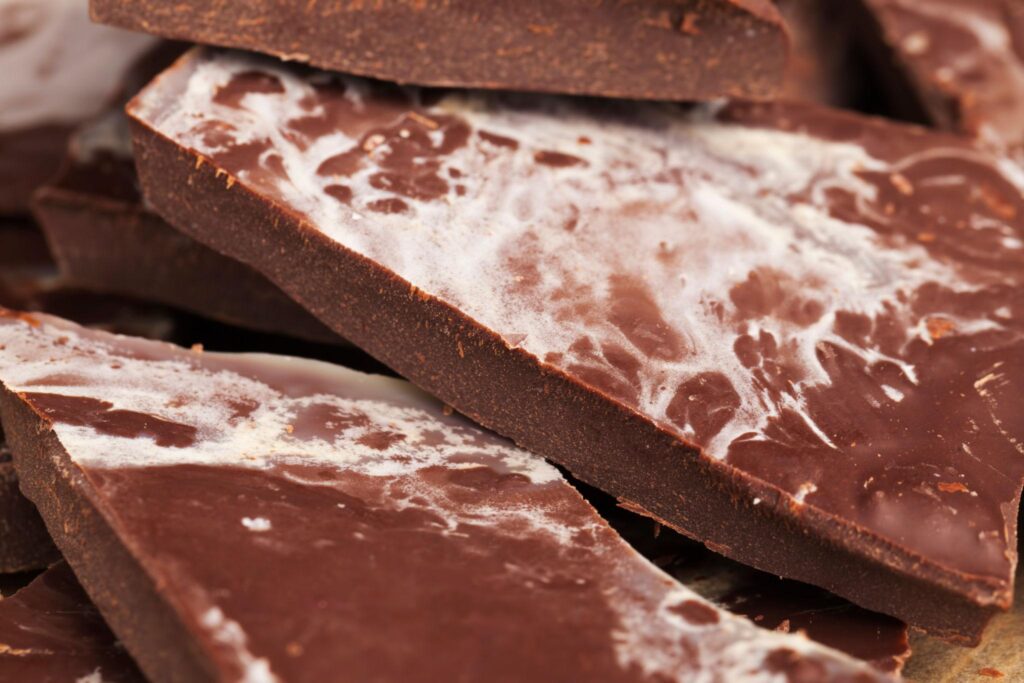
You open a chocolate bar expecting its usual glossy brown surface, only to find pale white marks across it. Has the chocolate gone bad?
Not necessarily. This change is commonly known as chocolate bloom, and it is one of the most misunderstood things about chocolate.
There are two main types. Fat bloom happens when cocoa butter moves towards the surface and forms visible pale patches. Sugar bloom occurs when moisture dissolves sugar on the surface, which later crystallises and leaves a rough, whitish appearance.
Temperature changes, humidity and poor storage can all contribute to the problem.
Although bloom can affect chocolate’s appearance and texture, it does not automatically mean the product is unsafe to eat. The chocolate may simply lose some of its smooth finish and familiar snap.
For manufacturers and retailers, preventing bloom is important because appearance plays a major role in how consumers judge chocolate quality.
How can chocolate be stored better?
Keep chocolate in a cool, dry place away from direct sunlight and strong smells. Avoid repeated temperature changes, which can encourage cocoa butter to move around.
Chocolate is more delicate than it looks. Even small changes in its storage environment can affect its final appearance.
Have you ever opened a chocolate bar and mistaken bloom for mould?
From Macao Cacao — bringing you closer to the stories behind chocolate.